What a microcredential is
A microcredential is a short, formally recognised course focused on one area. Ours run for seven weeks, with one live online class each Wednesday evening from 6:30 to 8:30pm. On top of that, you'll spend four to six hours a week on guided project work, usually applied to your own business or job, done whenever suits you.
Each one costs $980, and many employers cover it from their professional development budget. Team enrolments can be arranged too.
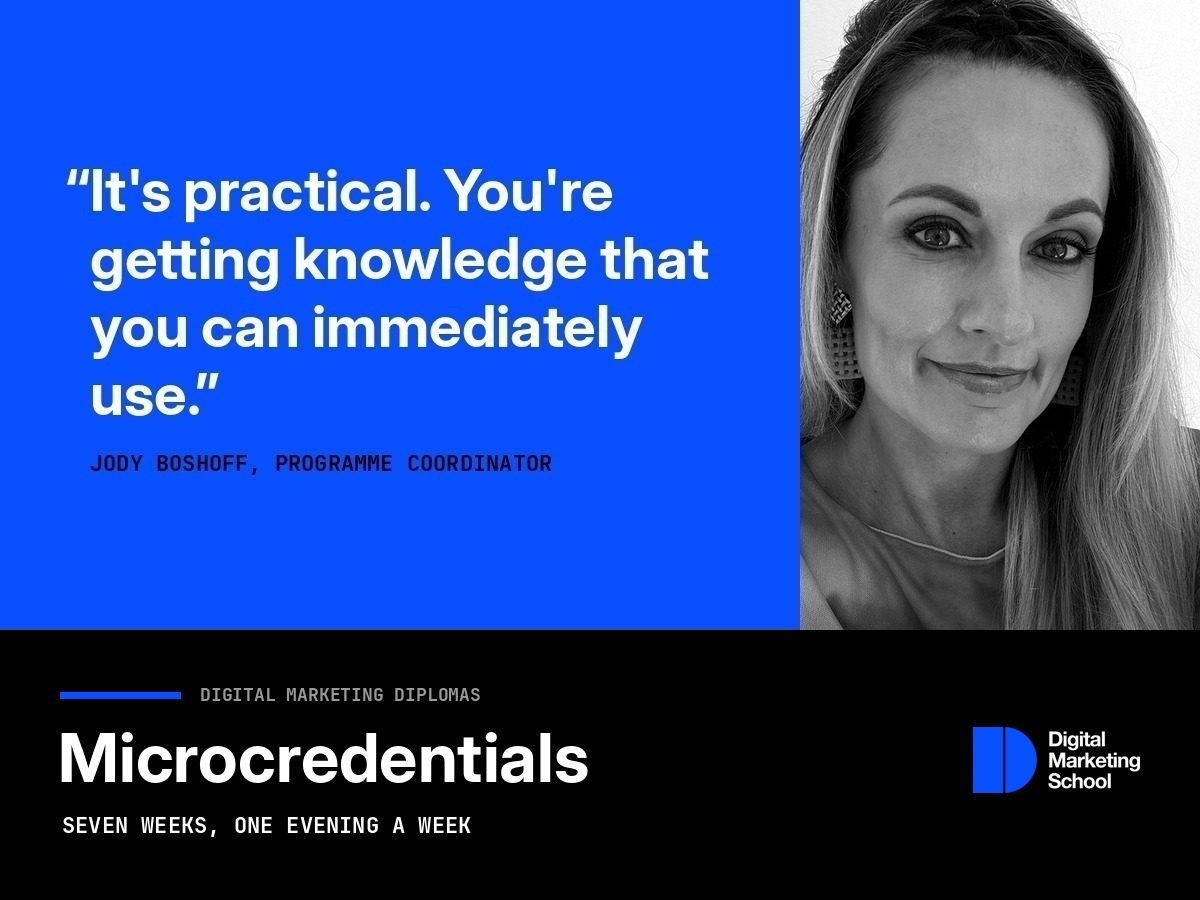
Jody, our Microcredentials Programme Coordinator, describes them as a way to add a skill without a big commitment.
"It's practical. You're getting knowledge that you can immediately use. But it's not a three-year commitment."
The five microcredentials
SEO Strategy. SEO is a system. You'll learn how ranking, content, structure and authority work together, including how AI is changing search, and finish with a plan for a real website. Taught by Michaela, our search engine optimisation tutor.
Paid Search Advertising. Paid search is a series of trade-offs. You'll learn how budget, bidding and optimisation decisions shape performance over time, and how to explain those decisions. Taught by Prabin, our SEO, PPC and CRO tutor.
AI in Marketing Practice. Build practical AI workflows across content, creative, analysis and reporting, including where AI adds value, where it doesn't, and how to keep quality, brand voice and judgement intact.
Social Media Marketing Strategy. Learn to build social campaigns with a clear purpose, defined structure and measurable outcomes. Taught by Natasha, our social media marketing strategy tutor.
Digital Marketing Strategy. See how digital marketing actually fits together, from research and audience insight through to channels, content and measurement. Taught by Leo, Programme Coordinator for our Level 6 Diploma in Digital Marketing.
Who they're for
Jody sees three groups. Business owners who want to do their own marketing properly. People already working in marketing who want to strengthen a weaker area. And people testing the waters before committing to a diploma.
She remembers one student who ran a gardening and landscaping business. Every week she posted photos of her work, and that was her marketing. During the course she learned she could put money behind her posts to reach more people, tried it, and came back to class delighted: "I never knew this was possible."
That's the point of a microcredential. One skill, applied straight away.
What you walk away with
Because the project work is applied to your own business or job, you finish with something real, not just notes. Jody explains:
"A lot of them build campaigns that actually will live in the wild. They use it as a test bed for their own business, and they come away with something that's going to start working."
Many students come back for another microcredential once they've seen what seven weeks can do. Jody calls them repeat learners. Some go on to a full diploma.
Quick answers
Do I need marketing experience? No. You'll need to meet English language requirements and have a reliable internet connection and a laptop or desktop.
When's the next intake? Intakes run several times a year. Check each course page for dates.
Can my employer pay? Yes. Many students are funded through their employer's professional development budget.
About Digital Marketing School, powered by NZIE
Digital Marketing School (DMS) is one of the trading names of the New Zealand Institute of Education (NZIE), and has specialised in digital marketing education since 2015. Our diplomas and microcredentials are NZQA-accredited and taught live, 100% online.