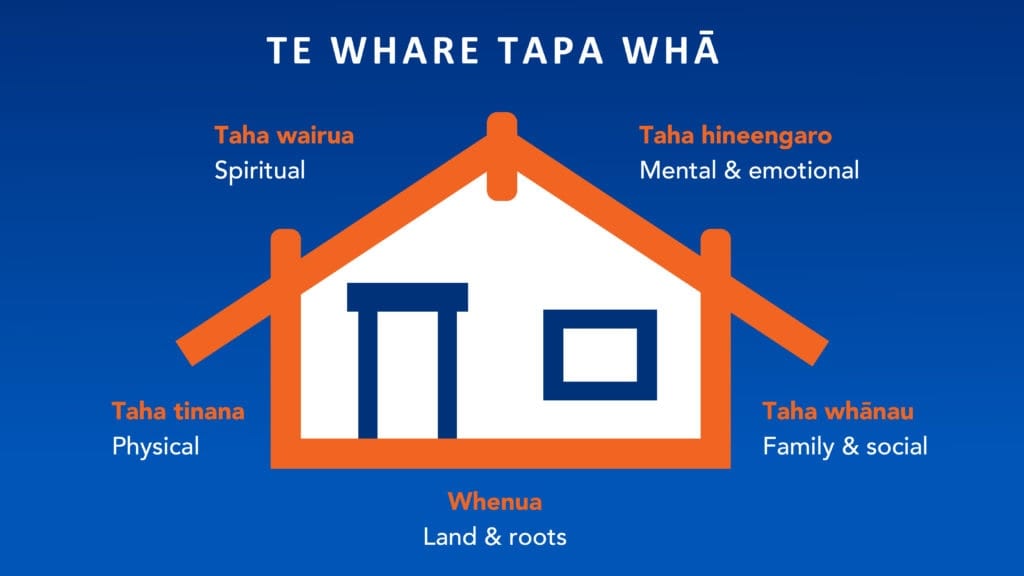
Te Whare Tapa Whā: the model behind our student support
We have a model in place to help students achieve excellence and remain supported throughout their study journey.
Our Student Success Team is guided by Te Whare Tapa Whā, a Māori health model developed by Sir Mason Durie. Learn more about the model below or by visiting Health.govt.nz.
The Te Whare Tapa Whā model
The model displays the elements of hauora (well-being): 'te whare tapa whā' — the four cornerstones (or sides) of Māori health.
- Taha tinana: physical health
- Taha wairua: spiritual health
- Taha whānau: family and social health
- Taha hinengaro: mental and emotional health
A fifth element is also recognised:
- Whenua: land and roots
“Should one of the...dimensions be missing or in some way damaged, a person, or a collective may become 'unbalanced' and subsequently unwell.” — Health.govt.nz
How the Student Success Team uses the model
The Student Success Team uses this model when consulting a student in need: they may require assistance in areas of academic performance, wellbeing, career opportunities or with cultural connections.
Each member of the Student Success Team will determine which of the areas in Te Whare Tapa Whā is missing or damaged, and will use the appropriate tools and resources to strengthen them.
Tuakana–Teina
We also utilise the Tuakana–Teina relationship and mentor model. This is where graduates or students further along the course partner with newer students for additional support.
“Tuakana–Teina is a traditional Māori cultural philosophy and practice; also literally referring to the relationship between an older and younger sibling or close family members like cousins.” — Ako.ac.nz
All staff members are guided by our Cultural Advisor Terehia Walker and her husband Ngahiwi Walker in Māori practices and principles. We regularly reassess our use of Te Whare Tapa Whā and Tuakana–Teina with Terehia and Ngahiwi's guidance.
Further support
If you need support, reach out and let a staff member know — we can access help depending on your individual needs.